
Tydzień 26. Czesław Miłosz – tomik w wydaniu leporello
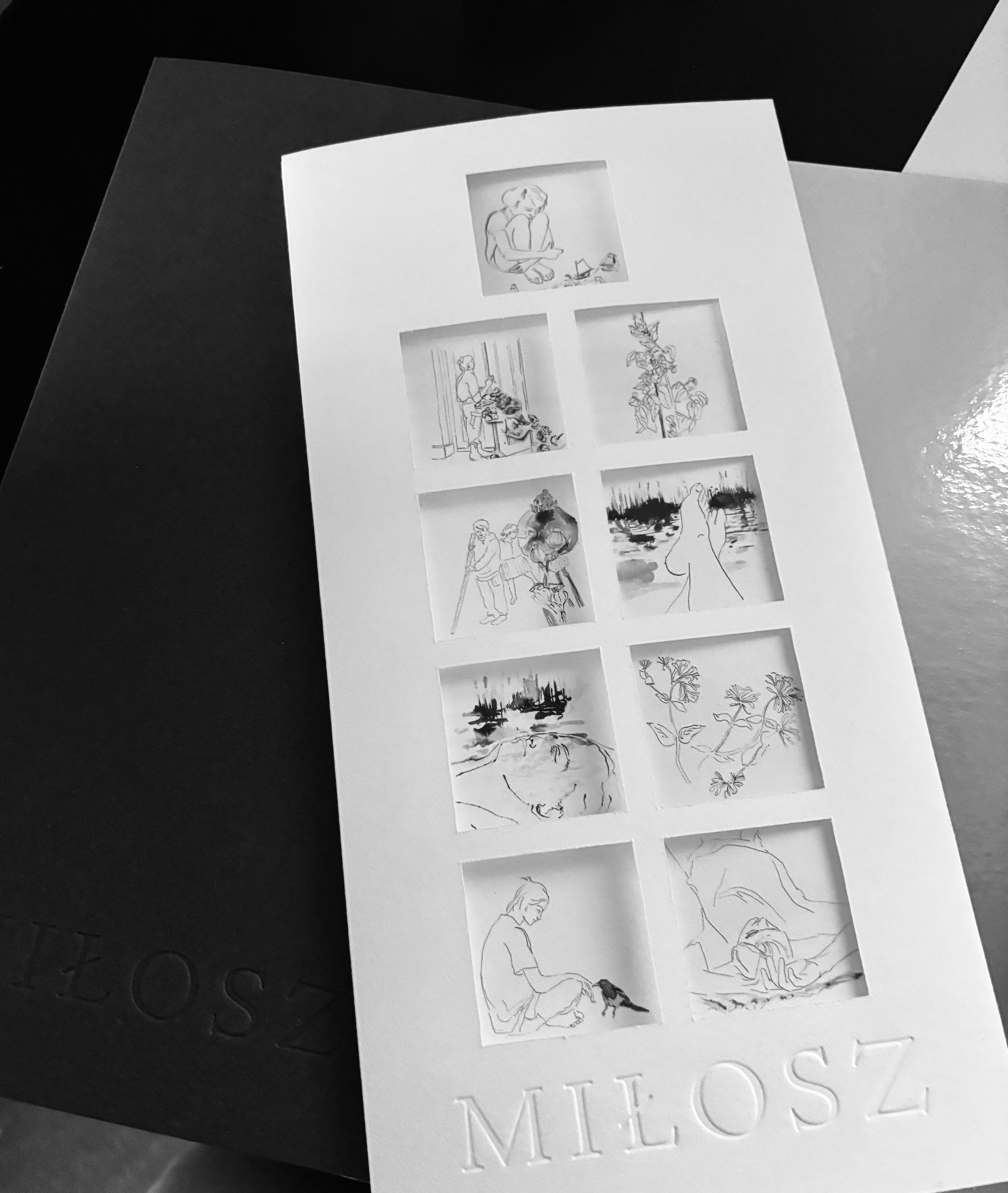
Sięgnąłem po to wydanie bardziej jak po obiekt niż klasyczny tom poezji. Kolekcjonerska edycja w formie leporello z wierszami Czesław Miłosz od początku sprawia wrażenie czegoś, co balansuje między książką a artystycznym artefaktem. To nie jest publikacja, którą się czyta szybko – raczej taka, którą się ogląda, dotyka i powoli odkrywa.
Forma gra tu pierwsze skrzypce. Papierowe leporello rozkłada się jak sekwencja obrazów, a nie tradycyjny układ stron. Witrażowe światło, metaliczne wykończenie i spokojna, szaro-przygaszona paleta tworzą wrażenie obcowania z przedmiotem zaprojektowanym równie starannie jak same wiersze. Już sam sposób wykonania sugeruje, że mamy do czynienia z doświadczeniem, a nie tylko lekturą.
Wybrano dziewięć wierszy Miłosza – i to też wydaje się znaczące. Nie jest to próba przekrojowego ujęcia twórczości, ale raczej stworzenie małej, skupionej przestrzeni, w której każdy tekst działa jak osobny punkt zatrzymania. W tej formie poezja nie prowadzi linearnie, tylko raczej zaprasza do powolnego oglądu i refleksji.
W opisie wydawcy pojawia się pytanie, jak dziś czytać poezję wielkiego Mistrza – niewzruszoną jak gotyckie budowle, a jednocześnie kruchą i intymną. I rzeczywiście, to wydanie nie tyle odpowiada, co proponuje własną interpretację: że poezja może istnieć nie tylko w słowie, ale też w formie, przestrzeni i materiale.
Warto też dodać kontekst samego autora. Czesław Miłosz urodził się w 1911 roku w Wilnie, w wielokulturowym regionie, który później często powracał w jego twórczości jako przestrzeń pamięci i utraconego świata. Doświadczenie XX wieku – wojny, totalitaryzmów i emigracji – stało się osią jego pisarstwa.
Po II wojnie światowej pracował w dyplomacji, jednak w 1951 roku zerwał z Polską Ludową i pozostał na emigracji. Przez kolejne dekady mieszkał m.in. we Francji i Stanach Zjednoczonych, gdzie wykładał literaturę słowiańską na Uniwersytecie Kalifornijskim w Berkeley. To właśnie wtedy powstała duża część jego najważniejszych esejów i tomów poetyckich, w których stale powracał temat pamięci, historii i moralnych wyborów człowieka.
W 1980 roku otrzymał Literacką Nagrodę Nobla, co potwierdziło jego pozycję jako jednego z najważniejszych poetów XX wieku. Do Polski wrócił na stałe po 1989 roku, a ostatnie lata życia spędził w Krakowie, gdzie zmarł w 2004 roku.
Ten kontekst biograficzny mocno zmienia sposób odbioru samego leporello. Dziewięć wierszy nie jest tu tylko wyborem redakcyjnym, ale fragmentem większej całości – twórczości, która stale negocjuje relację między pamięcią, historią i językiem.
Po obcowaniu z tym wydaniem zostaje przede wszystkim wrażenie, że poezja Miłosza nie jest czymś „zamkniętym” w książce. Raczej czymś, co funkcjonuje na granicy tekstu, doświadczenia i materialnej formy, którą dopiero trzeba powoli odczytać.
ENG
Week 26. Czesław Miłosz – collector’s edition volume (leporello)
I approached this edition more as an object than a traditional poetry book. The collector’s leporello edition featuring poems by Czesław Miłosz immediately feels like something positioned between a book and an art piece. It is not meant to be read quickly – it is something to unfold, observe, and slowly experience.
The format is central here. The leporello structure unfolds like a sequence of visual panels rather than conventional pages. Stained-glass-like light effects, metallic finishes, and a calm, muted grey palette create the impression of handling a carefully designed object. Even before engaging with the poems, the physical form signals that this is an experience rather than just reading material.
The edition includes nine selected poems by Miłosz, which already suggests a deliberate curatorial choice. Instead of offering a broad overview of his work, it creates a small, concentrated space where each poem functions as a separate point of pause. The text does not guide the reader linearly but invites slow attention and reflection.
What stands out most is the tension between form and content. Miłosz’s poetry, often deeply rooted in the history of the 20th century and the experience of catastrophe, is placed within a highly material and visually refined structure. The combination works surprisingly well – as if the physical object is trying to match both the weight and the fragility of his language.
The publisher raises the question of how we should read the work of a great master today – as something as solid as Gothic architecture, yet as delicate and intimate as something personal. This edition does not so much answer that question as offer its own interpretation: that poetry can exist not only in words, but also in form, space, and material presence.
It is also worth adding a bit of biographical context. Czesław Miłosz was born in 1911 in what is now Lithuania, in Vilnius – a multicultural region that would later become a recurring reference point in his work, often appearing as a lost or remembered world.
His life was deeply marked by the 20th century. The experience of World War II, totalitarian systems, and political upheaval became central to his writing. After the war, he worked for a time in diplomacy, but in 1951 he broke with the communist regime in Poland and chose exile, a decision that profoundly shaped both his life and his literature.
He spent many years in France and later in the United States, where he taught Slavic literature at the University of California, Berkeley. It was during this period of exile that many of his most important essays and poetry collections were written, consistently returning to themes of memory, morality, history, and the human condition in the aftermath of catastrophe.
In 1980, he was awarded the Nobel Prize in Literature, confirming his status as one of the major poetic voices of the 20th century. He returned permanently to Poland only after 1989 and spent his final years in Kraków, where he died in 2004.
This biographical background changes the way the leporello can be read. The nine poems are not just a selection, but a fragment of a much larger whole – a body of work constantly negotiating the relationship between memory, history, and language.
After spending time with this edition, what remains is the impression that Miłosz’s poetry is never fully contained within the book. It exists at the intersection of text, lived experience, and material form – something that has to be slowly uncovered rather than simply read.


Dodaj komentarz