• There was a race that captured the spirit of adventure and human endurance like no other, the Bieg 8848. This unique race in Poland was a tribute to the world’s highest peak, Mount Everest, and to the Polish mountaineers who made history by conquering it. Inspired by the legendary winter expedition of 1980, when Leszek Cichy and Krzysztof Wielicki became the first to summit Everest in winter, the Bieg 8848 was a race that pushed runners to their limits.

    The challenge was to run the equivalent of Everest’s height, 8,848 meters, spread across a set distance that tested the physical and mental endurance of every participant. The race was held annually in three cities: Szczecin, Warsaw, and Karpacz, usually in February, in connection with the anniversary of the historic summit.

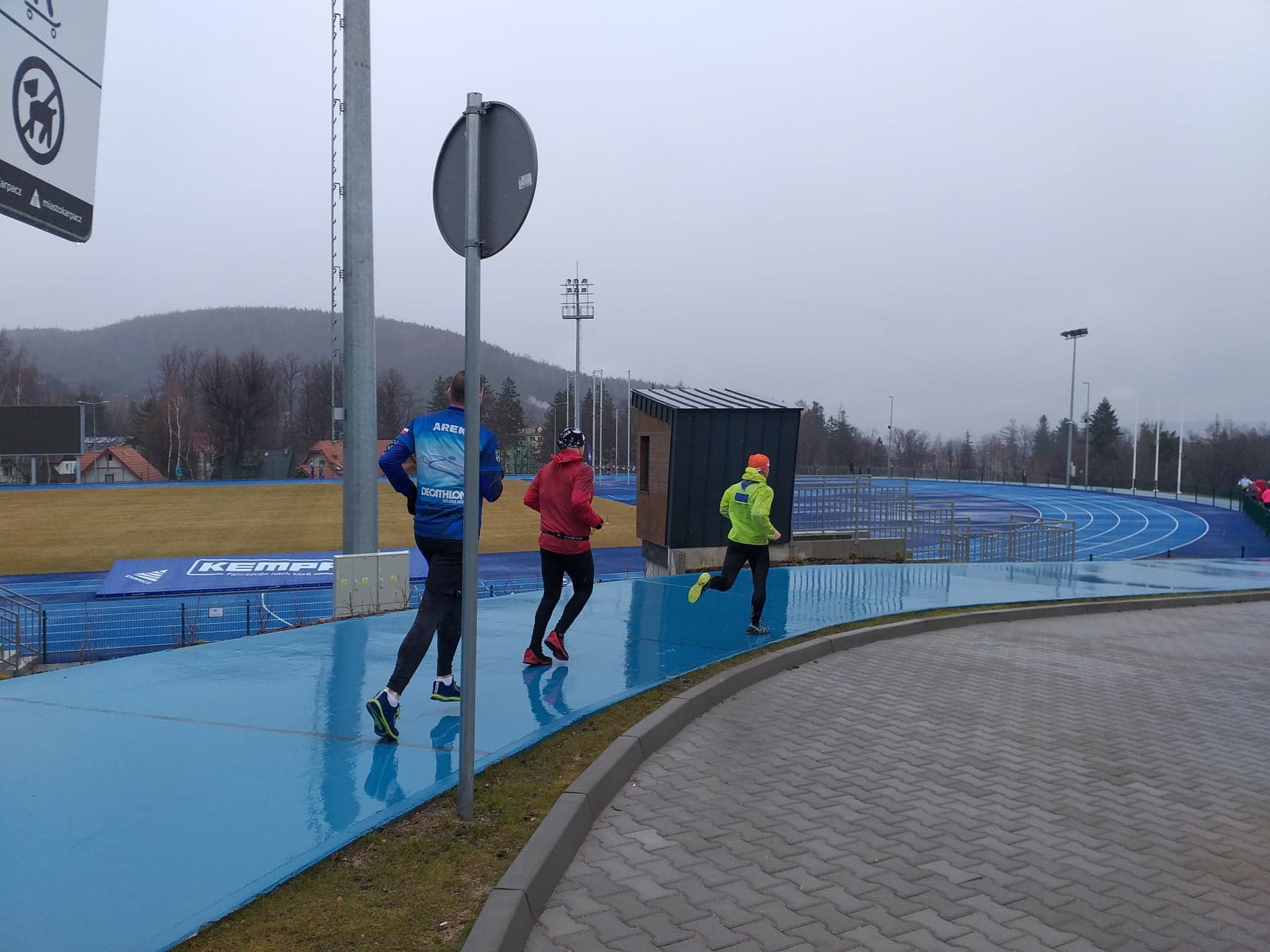
    I remember running in Karpacz that time. The race took place on the stadium at the foot of the Karkonosze Mountains, and the weather that day was something else. It rained heavily, soaking everyone, but despite the downpour, the atmosphere was incredible. The track, wet and slippery, added an extra challenge, but it also brought a sense of camaraderie among the runners. Everyone was in it together, pushing through the rain and the cold.

    What made the race even more special was the crowd, cheering families, friends, and strangers who were there to support. I could hear the cheers of my family in the stands, encouraging me as I pushed through the final laps. It was a mix of exhaustion and exhilaration, knowing that every step taken was a small tribute to the legacy of those who had conquered Everest.

    It was more than just a race, it was a commemoration of one of Poland’s greatest achievements in mountaineering. The event was held on specific dates, February 9th, 15th, and 23rd, each one marking an emotional milestone in the history of Polish climbing, with the actual Everest summit taking place on February 17, 1980. Along with the physical challenge, participants were offered a chance to connect with the rich history of Polish exploration, receiving souvenirs from Nepal and hearing stories from legends of the mountain.

    Unfortunately, like many unique events, the Bieg 8848 eventually faded into the past, but it remains a cherished memory for those who ran it. The race may no longer be around, but the legacy of those who conquered Everest, and the spirit of adventure it inspired, continues to inspire new generations of athletes and adventurers. The Bieg 8848 may no longer exist, but it will always be remembered as a race that celebrated not only physical endurance but also the power of human spirit.

    PS That weekend, I had also been hiking in the mountains, and my legs were stiff from the climbs. The rain didn’t help either, but despite the discomfort, I found that consistency, just continuing to push through step by step, gave me the strength to finish strong. It was a reminder that when you stick with it, even when things get tough, you can overcome and accomplish more than you think.
  • There is a unique stillness in winter that invites reflection. While frost glitters on windowpanes and early nights stretch long and quiet, we are drawn inward into our homes, our thoughts, and the gentler rhythms of daily life. This often-overlooked season offers a rare opportunity to pause, to consider the year that has passed, and to notice small lessons that might otherwise escape our hurried attention. Unlike the frenzy of New Year resolutions or the pressure to plan grand transformations, winter asks only that we observe, reflect, and grow at our own pace.

    Sitting in the quiet of winter 2025, I find myself thinking about the experiences of the past year. Conversations with friends, family, and colleagues reveal a shared sense of learning and adaptation, moments of challenge met with patience, unexpected joys, and subtle changes in how we approach daily life. Together, we reflect on what we have done differently, what habits we have adjusted, and what choices have brought us closer to the lives we hope to lead.

    This year, a subtle shift has become clear: we are noticing more of the positives around us. Achievements, acts of kindness, and even minor personal victories stand out with clarity. This growing awareness does not erase difficulties, but it does foster a more hopeful outlook, reminding me that positive thinking is not about ignoring reality, it is about giving attention to what nurtures us and moves us forward.

    Winter, with its long nights and gentle hush, naturally encourages reflection. The stillness outside mirrors the calm we can cultivate within, allowing us to process the year’s events without distraction. In these moments, we pause to appreciate progress, consider lessons learned, and plan quietly, not with pressure or grand resolutions, but with intention and awareness. In this season, we can nurture patience, gratitude, and clarity, carrying these insights forward as the new year approaches.

    As winter slowly gives way to the promise of a new year, I carry with me the quiet lessons of this season. Growth often happens in small, almost imperceptible ways, and paying attention to life’s subtleties can bring a deeper understanding of ourselves and others. By noticing the positives, learning from challenges, and embracing the calm, we step into the coming year with mindfulness and hope. Winter, in its stillness, has reminded me that the most meaningful change often begins within, in moments of quiet reflection and gentle awareness.

  • Bieg z Wąsem (The Run with a Moustache) is a unique initiative created by the Fizjobiegacze Szczecin team, for whom movement and an active lifestyle are key elements of good health and prevention. The idea behind this event is simple but powerful. It aims to promote awareness about men’s health and to reduce the risk of cancer through physical activity.

    Once a year, traditionally in November, runners from all over the region gather to take part in this special event, proudly wearing characteristic moustaches. Hundreds of participants, regardless of age or gender, join the fun, showing off their creative costumes and cheerful energy. It is more than just a race. It is a joyful celebration and a community effort to raise awareness about health and prevention.

    Bieg z Wąsem is part of the global Movember movement, which encourages men to talk openly about their health and to take preventive actions against diseases such as prostate and testicular cancer. Since 2019, the Fizjosport.org Association has been cooperating with the Nie Warto Foundation, offering free medical check-ups for men, including testicular ultrasound and PSA tests for prostate cancer.

    Over the years, more than 2,600 participants have taken part in Bieg z Wąsem, which is a remarkable sign of how much can be achieved when people come together for a meaningful cause. This event proves that running can be more than sport. It can be a way to inspire, educate, and support the health and well-being of the whole community.

    PS: Since we are talking about health and celebrating life, today is my birthday! 🥳 I haven’t had many chances to celebrate it before, mostly because of work, so this time it’s a perfect occasion. Later, I’ll spend time with my family. I can’t believe how fast time has flown, and now I’m approaching 40, stepping closer with big strides, but at least with a smile! 😄

  • For the first time in a long while, I could see the independent crowd on the streets of my hometown. For years luck hadn’t been on my side, but taking advantage of the occasion, I decided not to travel to the capital and stayed home instead.

    I began my celebration a day early in a charmingly named place, Stolec near Dobra, in the Szczecin region. Unexpectedly, it became a phenomenal, intimate run in the midst of nature. There was no real competition, just a lot of quiet reflection and simple running. At the start, I ran over freshly fallen leaves, past slightly frozen humps in the trail, the rhythm of my footsteps blending with the crisp air. The experience was sprinkled with a small yet memorable ceremonial moment and the handing over of the flag in honor of a very special milestone — one hundred and twenty-three years, no less. Less is more? Perhaps.

    The next day, as tradition dictated, I joined friends for the Independence March. I was surprised by the turnout — over six thousand people gathered, all cheerful, all moving together in a warm, family-like atmosphere. It was a vivid reminder that celebrating freedom is not about grand gestures, but about people coming together with sincerity and joy.

    Stolec may have been only the site of a one-time centennial run, but it left its mark in memory. It was a quiet, reflective journey through nature and history, a reminder that some races are measured not by medals or records, but by the feelings they leave behind.

    I hope to return next year, and I wish everyone at least another hundred years of wisdom and friendship.

    PS: Stolec is such a funny name for a village — it literally means “stool” in Polish — yet there is something incredibly charming about it. Its small trails, quiet forests, and gentle hills have a way of putting a smile on my face every time I think about them. Even now, the name alone makes me grin and brings back the warmth of that peaceful run.

  • Every year on 11 November Poland celebrates its Independence Day, a date that holds deep meaning for every Polish heart. It marks the moment in 1918 when, after 123 years of partitions, our nation regained its sovereignty and returned to the map of Europe. For more than a century Poland had been divided among Russia, Prussia and Austria, its name erased and its people oppressed. But the spirit of the Polish nation never died.

    The road to independence was long and full of sacrifice. Many great people dedicated their lives to the idea of a free Poland. Among them was Józef Piłsudski, who became a symbol of courage and leadership, guiding the nation toward freedom. There were also countless soldiers, teachers and ordinary citizens who kept the Polish language, culture and faith alive even when it was forbidden. Their strength and unity made independence possible.

    Today, more than a hundred years later, Poles remember this history not only with official ceremonies but also through community and movement. One of the most beautiful traditions of 11 November is the Independence Run, events held all over the country from big cities to small villages. Thousands of people take to the streets dressed in white and red, the colors of our flag, to honor those who fought for freedom.

    This year I also took part in two runs. In the morning I joined an Independence Run in a nearby town, feeling the cold November air and the excitement shared by hundreds of runners. Then in the evening I ran again in my hometown. The streets were alive, flags waving from balconies, children cheering and families clapping from the sidewalks. Everywhere you could feel the same energy, pride, gratitude and unity.

    After finishing my race I went with my family to support others, standing among the crowd and cheering for those who were still running. It was more than just a sporting event; it was a moment to reflect on what freedom means, how precious it is and how many sacrifices were made so we could live in a free country.

    Running on 11 November feels like running with history, every step a reminder of those who came before us, every heartbeat echoing the strength of Poland’s spirit. It is not only about speed or distance but about connection, with our past, with our people and with the land that has endured so much yet always rises again.

    PS. In the past we used to go out into the streets or even travel to big cities with our families to celebrate this special day. Everyone had flags, scarves and other patriotic symbols, and the atmosphere was truly festive everywhere. Now I usually celebrate it more locally with my own family, but the feeling of pride and gratitude remains the same.