• For the first time in a long while, I could see the independent crowd on the streets of my hometown. For years luck hadn’t been on my side, but taking advantage of the occasion, I decided not to travel to the capital and stayed home instead.

    I began my celebration a day early in a charmingly named place, Stolec near Dobra, in the Szczecin region. Unexpectedly, it became a phenomenal, intimate run in the midst of nature. There was no real competition, just a lot of quiet reflection and simple running. At the start, I ran over freshly fallen leaves, past slightly frozen humps in the trail, the rhythm of my footsteps blending with the crisp air. The experience was sprinkled with a small yet memorable ceremonial moment and the handing over of the flag in honor of a very special milestone — one hundred and twenty-three years, no less. Less is more? Perhaps.

    The next day, as tradition dictated, I joined friends for the Independence March. I was surprised by the turnout — over six thousand people gathered, all cheerful, all moving together in a warm, family-like atmosphere. It was a vivid reminder that celebrating freedom is not about grand gestures, but about people coming together with sincerity and joy.

    Stolec may have been only the site of a one-time centennial run, but it left its mark in memory. It was a quiet, reflective journey through nature and history, a reminder that some races are measured not by medals or records, but by the feelings they leave behind.

    I hope to return next year, and I wish everyone at least another hundred years of wisdom and friendship.

    PS: Stolec is such a funny name for a village — it literally means “stool” in Polish — yet there is something incredibly charming about it. Its small trails, quiet forests, and gentle hills have a way of putting a smile on my face every time I think about them. Even now, the name alone makes me grin and brings back the warmth of that peaceful run.

  • Every year on 11 November Poland celebrates its Independence Day, a date that holds deep meaning for every Polish heart. It marks the moment in 1918 when, after 123 years of partitions, our nation regained its sovereignty and returned to the map of Europe. For more than a century Poland had been divided among Russia, Prussia and Austria, its name erased and its people oppressed. But the spirit of the Polish nation never died.

    The road to independence was long and full of sacrifice. Many great people dedicated their lives to the idea of a free Poland. Among them was Józef Piłsudski, who became a symbol of courage and leadership, guiding the nation toward freedom. There were also countless soldiers, teachers and ordinary citizens who kept the Polish language, culture and faith alive even when it was forbidden. Their strength and unity made independence possible.

    Today, more than a hundred years later, Poles remember this history not only with official ceremonies but also through community and movement. One of the most beautiful traditions of 11 November is the Independence Run, events held all over the country from big cities to small villages. Thousands of people take to the streets dressed in white and red, the colors of our flag, to honor those who fought for freedom.

    This year I also took part in two runs. In the morning I joined an Independence Run in a nearby town, feeling the cold November air and the excitement shared by hundreds of runners. Then in the evening I ran again in my hometown. The streets were alive, flags waving from balconies, children cheering and families clapping from the sidewalks. Everywhere you could feel the same energy, pride, gratitude and unity.

    After finishing my race I went with my family to support others, standing among the crowd and cheering for those who were still running. It was more than just a sporting event; it was a moment to reflect on what freedom means, how precious it is and how many sacrifices were made so we could live in a free country.

    Running on 11 November feels like running with history, every step a reminder of those who came before us, every heartbeat echoing the strength of Poland’s spirit. It is not only about speed or distance but about connection, with our past, with our people and with the land that has endured so much yet always rises again.

    PS. In the past we used to go out into the streets or even travel to big cities with our families to celebrate this special day. Everyone had flags, scarves and other patriotic symbols, and the atmosphere was truly festive everywhere. Now I usually celebrate it more locally with my own family, but the feeling of pride and gratitude remains the same.

  • There was once an event called the Triada Biegowa in Częstochowa, a unique running experience that turned a regular weekend into a test of endurance, faith, and leg strength. It lasted three days, with a different race each day, and every morning brought a new route, a new challenge, and new ways to wonder why we runners voluntarily do this to ourselves.

    Częstochowa was a perfect setting for such an event. It is one of the most famous Christian pilgrimage destinations in Poland, home to the Jasna Góra Monastery and the Black Madonna, a place where people come to find spiritual strength. During the Triada Biegowa, many of us were also searching for strength, though in a slightly more physical way, one hill and blister at a time.

    But the city has more than just its religious side. It is also known for Raków Częstochowa, one of Poland’s best football teams, and for its rather imposing prison, which definitely adds some character to the place. Running past the monastery, the stadium, and the prison in one weekend felt like the perfect summary of the human experience: faith, passion, and discipline, or at least trying not to collapse before the finish line.

    The Triada Biegowa offered something for everyone, a mix of distances, terrains, and moods. Day one tested our speed, day two our patience, and by day three we were mostly testing our ability to still move forward without crying. It was not about medals or records but about the strange satisfaction of finishing all three runs and realizing you could still walk, more or less.

    Sadly, just like many other great local races, the Triada Biegowa no longer exists. It disappeared quietly from the running calendar, leaving behind only memories, a few medals gathering dust, and a group of runners who still talk about that crazy weekend in Częstochowa.

    For me, it was more than just a race series. It was a small adventure that connected the city’s spirit with the runner’s determination. Częstochowa reminded me that endurance is not only about muscles or kilometers. Sometimes it is about faith, in yourself, in the finish line, and occasionally in the fact that the next aid station really does have cookies.

    P.S. Speaking of faith, I arrived in Częstochowa a day early to visit Jasna Góra, the Holy Mountain for Poles, to follow tradition and say a small prayer for the run. It turned out to be quite a lesson in itself, because on the second day I fell spectacularly on Osson Hill and tore up my knees. The moral of the story is that you do not always receive exactly what you pray for. At least I learned something useful — where to find open and 24-hour pharmacies in Częstochowa on holidays.

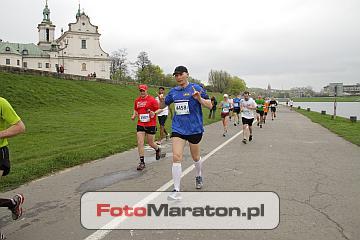
    A blurred group of marathon runners running on a city street.
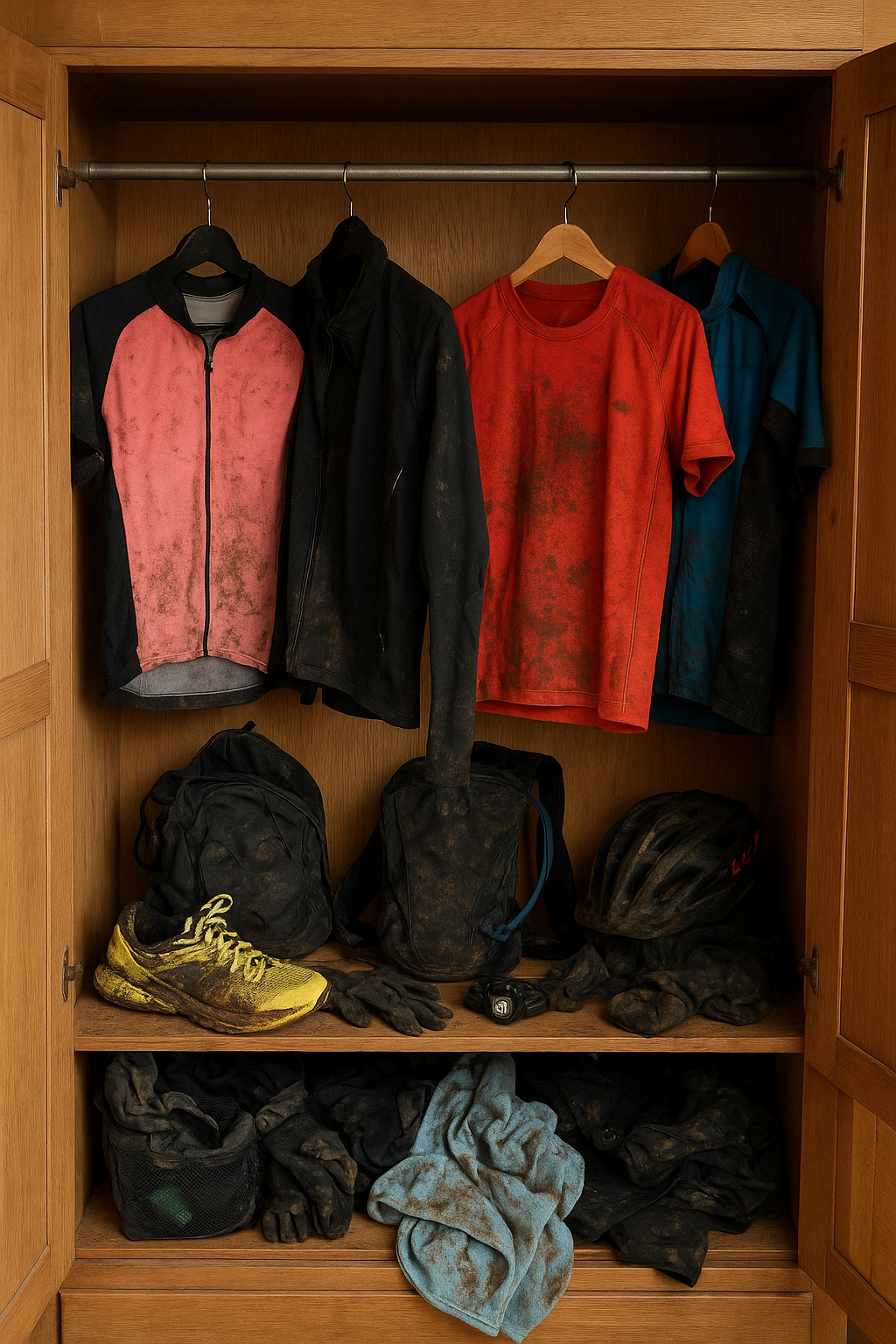
  • As a runner and cyclist, my wardrobe and gear are basically their own obstacle course. I have this… let’s call it a “seasonal rotation system,” which happens maybe two or three times a year. And every single time, I manage to do something completely wrong.

    For example, just now I grabbed my summer clothes… in the middle of autumn. Classic. You would think after a few years of training, I’d have this down. But no. Somehow, my closet ends up being like a personal comedy show: cycling jerseys mixed with winter running tights, summer shorts chilling next to wool socks, and at least one pair of sneakers that should probably be retired but keep making cameos.

    Sometimes it’s even worse because I live in more than one place a year. One is colder, one is warmer, and I keep going back and forth. By the time I switch my clothes to the right climate, I’m already halfway insane. And that’s just the clothes. Don’t get me started on my Camelbak, bottles, headlamps, gloves, hats, and random accessories. Packing all of that for the right season, in the right place, is basically a full-time job.

    I’ve tried to organize it like a “pro wardrobe and gear system”: summer clothes up high, winter down low, race kits in one corner, casual stuff in another, bottles and lights in drawers, Camelbak on the hook… but the laws of the universe conspire against me. By January, I’m wearing flip-flops in snow, a hoodie in 30°C heat, and wondering why my headlamp is missing while my bottle is empty.

    Yet somehow, despite all the chaos, it’s a huge amount of fun. There’s something exciting about the challenge, the mix of running, cycling, switching climates, and juggling gear. It’s hard, sometimes crazy, but that’s exactly why it’s worth it.

    So here’s my expert advice for fellow runners and cyclists on handling wardrobe and gear: rotate, rotate, rotate… and then accept that you will inevitably get it wrong. Twice. Maybe three times. But you’ll do it with style, sweat, and a smile. And hey, it’s a perfect excuse to buy a new pair of socks, a new bottle, or maybe even a headlamp.

    PS: I have way too many headlamps and other lights. I rarely remember to pack them, so somehow I keep accumulating more and more. At this rate, I might need a separate backpack just for my lighting collection! 😄

  • The Gala Biegów Ultra in Kraków was one of the most distinctive ultra-running events in Poland, a celebration of endurance held right in the heart of the city, in Park Jordana. In 2020, it brought together runners from across the country for three challenges: the VII 12h Night Ultra Distance, the VI 6h Morning Patrol, and the II 3h Fast Trio. Everyone could find their own flavor of suffering, from a gentle morning jog to a full night of existential crisis at a steady pace.

    What made this event special was its open spirit. Both seasoned club athletes and brave amateurs could take part, as long as they were at least 21 years old and in decent health, and preferably had a sense of humor. On race day, we all gathered at the event headquarters by the 3 Maja entrance to Park Jordana, where we collected our bibs, timing chips, and, figuratively speaking, our last bits of sanity.

    The course was a loop of about 1.1 kilometers. It sounded innocent enough, just some asphalt, some trees, and a few street lamps. But after a few hours, that same simple loop turned into a mental battlefield. Running through the night gave the park a whole new character, filled with quiet, dim lights, rustling leaves, and the endless rhythm of footsteps. It wasn’t just a run anymore. It became moving meditation, mixed with fatigue, self-doubt, and a pinch of absurdity.

    Each lap felt like both a small victory and a polite reminder that there were still countless laps to go. Fatigue set in, the mind wandered, and internal monologues grew increasingly philosophical. Why am I doing this? Is this still fun? Do my shoes even exist? And yet, through all that, there was something magical about the night. The silent understanding between runners, the nods of encouragement, the volunteers cheering with genuine warmth, and the shared feeling of “we’re all in this together, for some reason.”

    It was a race against time, against the limits of body and mind, and sometimes against the overwhelming temptation to just lie down on the grass and call it a day. Still, every lap brought me closer to that quiet triumph only ultra runners know, the feeling that endurance itself is the reward.

    Sadly, the Ultra Running Gala no longer exists in this form. It once brought together Kraków’s running community with unmatched passion, but now it’s just a memory. Yet for those of us who ran those long hours in Park Jordana, the event lives on as a reminder that true endurance doesn’t always need mountains or wilderness. Sometimes, the hardest battles are fought in circles under city lights, with the world asleep around you and only your own heartbeat for company.

    P.S. Speaking of battles, my crew was kindly handing me cookies during the race to “keep my energy up.” The problem was, I wasn’t exactly in the mood for cookies after eight hours of running, so I started leaving them on the next aid table each lap, like a secret cookie relay. By the end of the race, my little scheme was discovered, and the organizers made me officially eat them all in front of everyone after the finish. Turns out the true endurance test wasn’t twelve hours of running, it was those last few cookies.