

Our journey began with an early morning flight from a nearby capital city—the most convenient route for us. We had arranged transportation in advance, making the trip to the airport smooth and stress-free. Excited for the next adventure in our family’s growing collection of travels, we boarded a Spanish airline that pleasantly surprised us with its level of service and comfort. From the cheerful crew to the clean, modern cabin, everything set a positive tone for the trip ahead. With big smiles and bags full of anticipation, we took off, ready to explore and make new memories together.
Packed as if we were setting off on a month-long expedition through at least three climate zones, we lugged our bags—well, I lugged the bags, while the rest of the family nobly focused on maintaining morale. Luckily, that ordeal didn’t last long—our trusty local driver was already waiting for us, and with the skills of a traffic-dodging secret agent, he whisked us through the city, avoiding every jam like he had planned them himself. Before we knew it, we had arrived, still full of energy (a rare post-travel phenomenon in our family) and ready to start exploring!
Barcelona is an absolute treasure trove of sights and experiences—so much so that it’s hard to decide where to begin. The city bursts with color, history, unique architecture, and a vibrant atmosphere that makes you want to be everywhere at once. Luckily, we had many days ahead of us, so we could take things slow. There was no pressure to see everything at once; instead, we paced ourselves, exploring something new each day. This way, we didn’t just tick off landmarks—we truly soaked in the spirit of Barcelona and its charming outskirts. Of course, we kicked things off with the queen of all attractions: the breathtaking Sagrada Família…
The Sagrada Família is Barcelona’s most famous landmark. Construction began in 1882, and a year later, the project was taken over by Antoni Gaudí, who gave it its iconic, fairy-tale look. Over 140 years later, it’s still under construction—due to a mix of funding issues and the building’s extreme architectural complexity. Parts of it are covered in scaffolding and mesh, which does take away from the full visual impact.
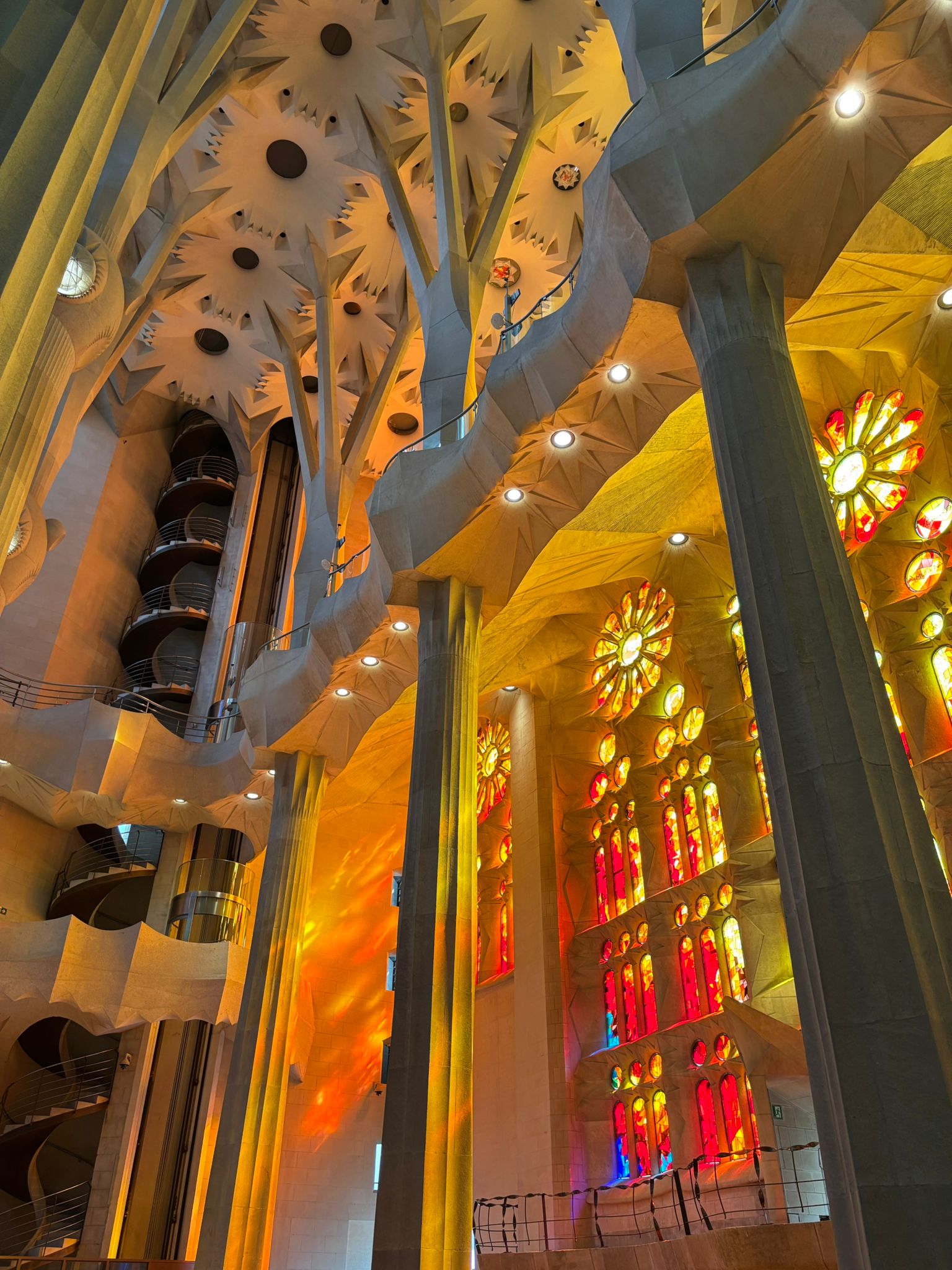
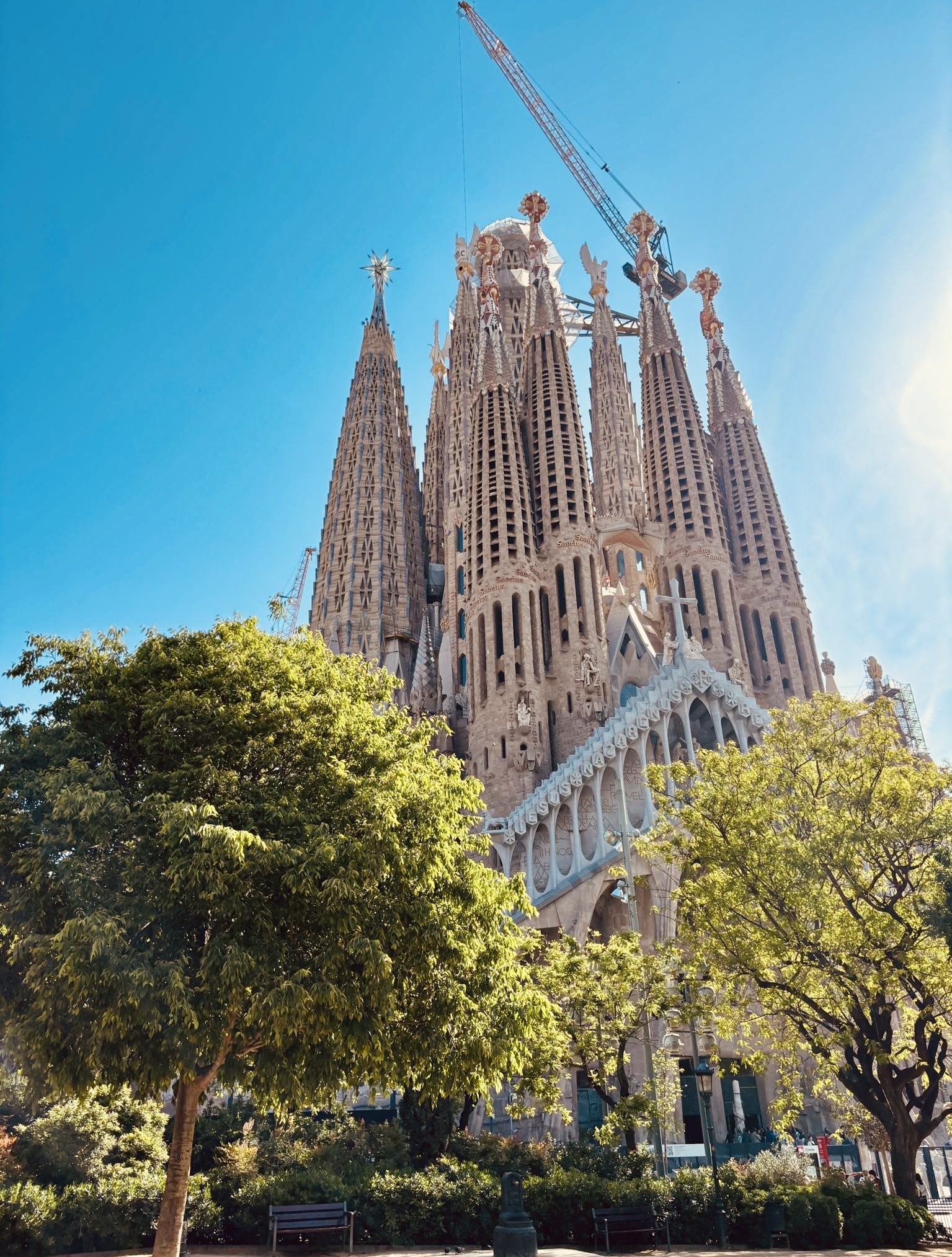
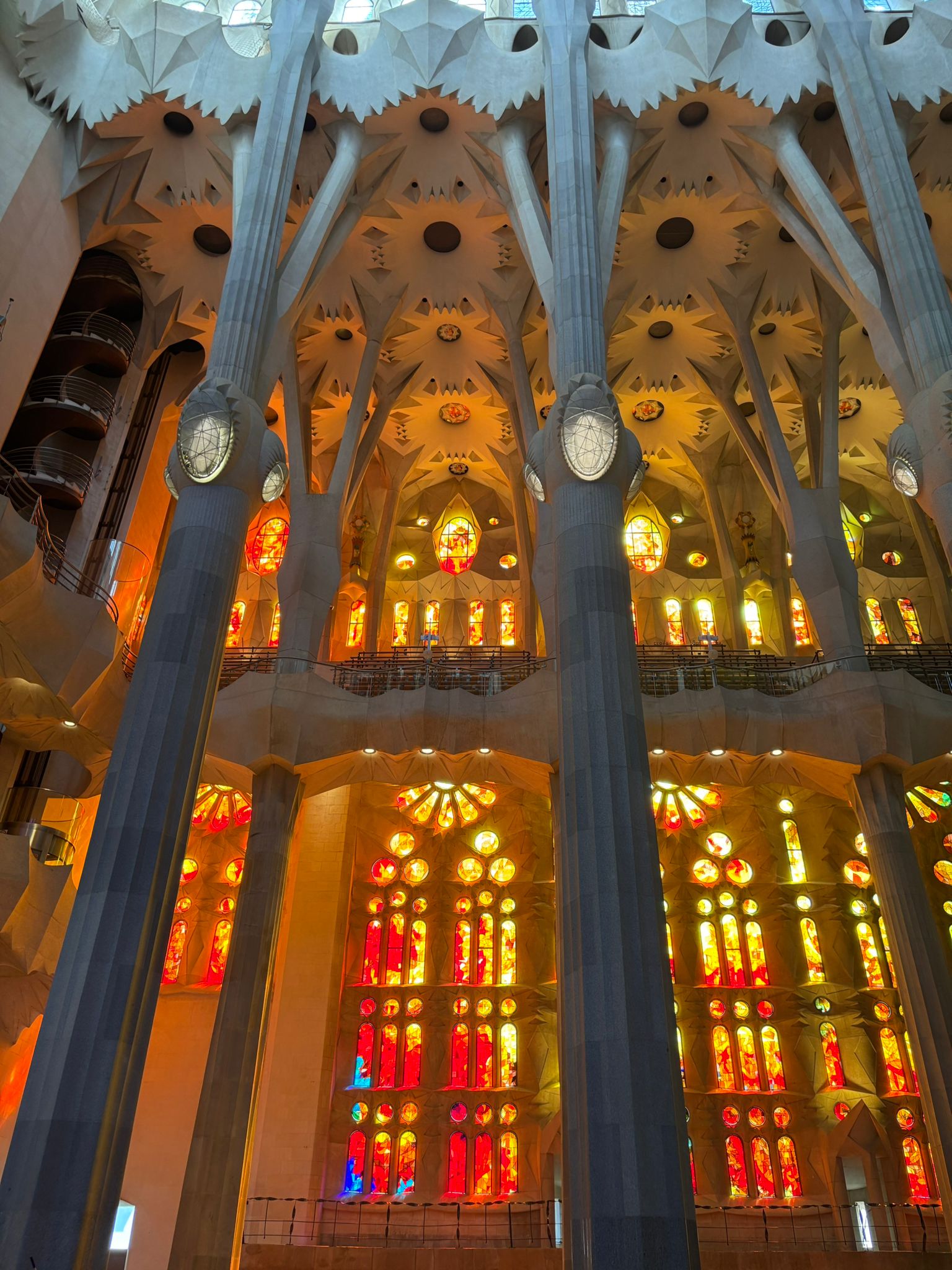
It’s easy to reach by metro (lines L2 or L5), but be prepared for crowds—there are lots of visitors every day of the week. Tickets are expensive and often need to be booked in advance. Honestly, it feels a bit overrated from the outside, especially with all the ongoing work. But once you’re inside, the atmosphere completely changes. The soaring columns, colorful stained glass, and play of light truly impress. And one undeniable perk: you can spot this towering basilica from nearly anywhere in the city.
Following the Gaudí trail in Barcelona is like walking through an open-air art museum—his buildings are scattered throughout the city and most of them are surprisingly easy to see in just a few hours, even with a baby stroller in tow. Many of his most famous works are located in or near the city center, making the route both accessible and stroller-friendly.
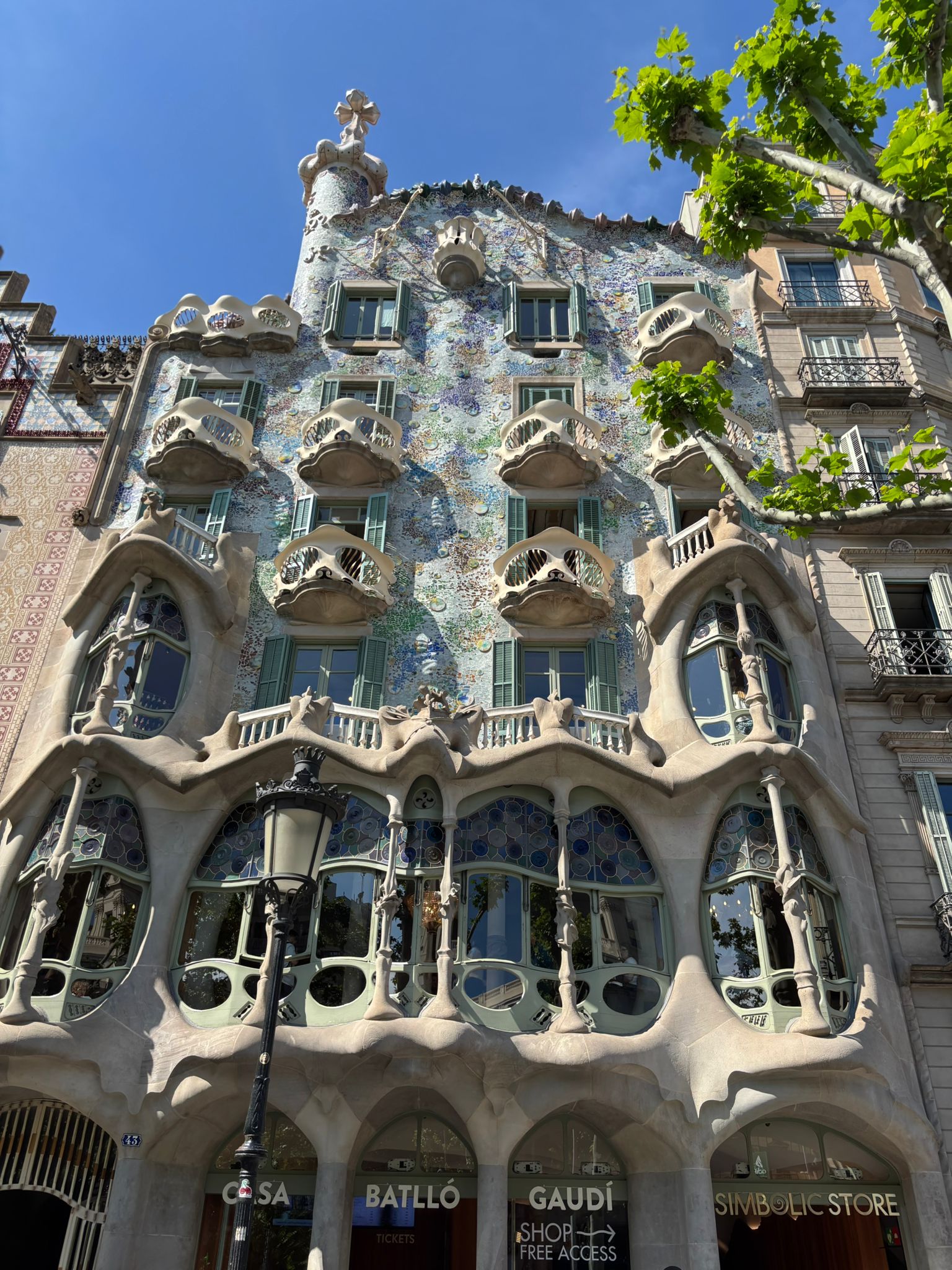
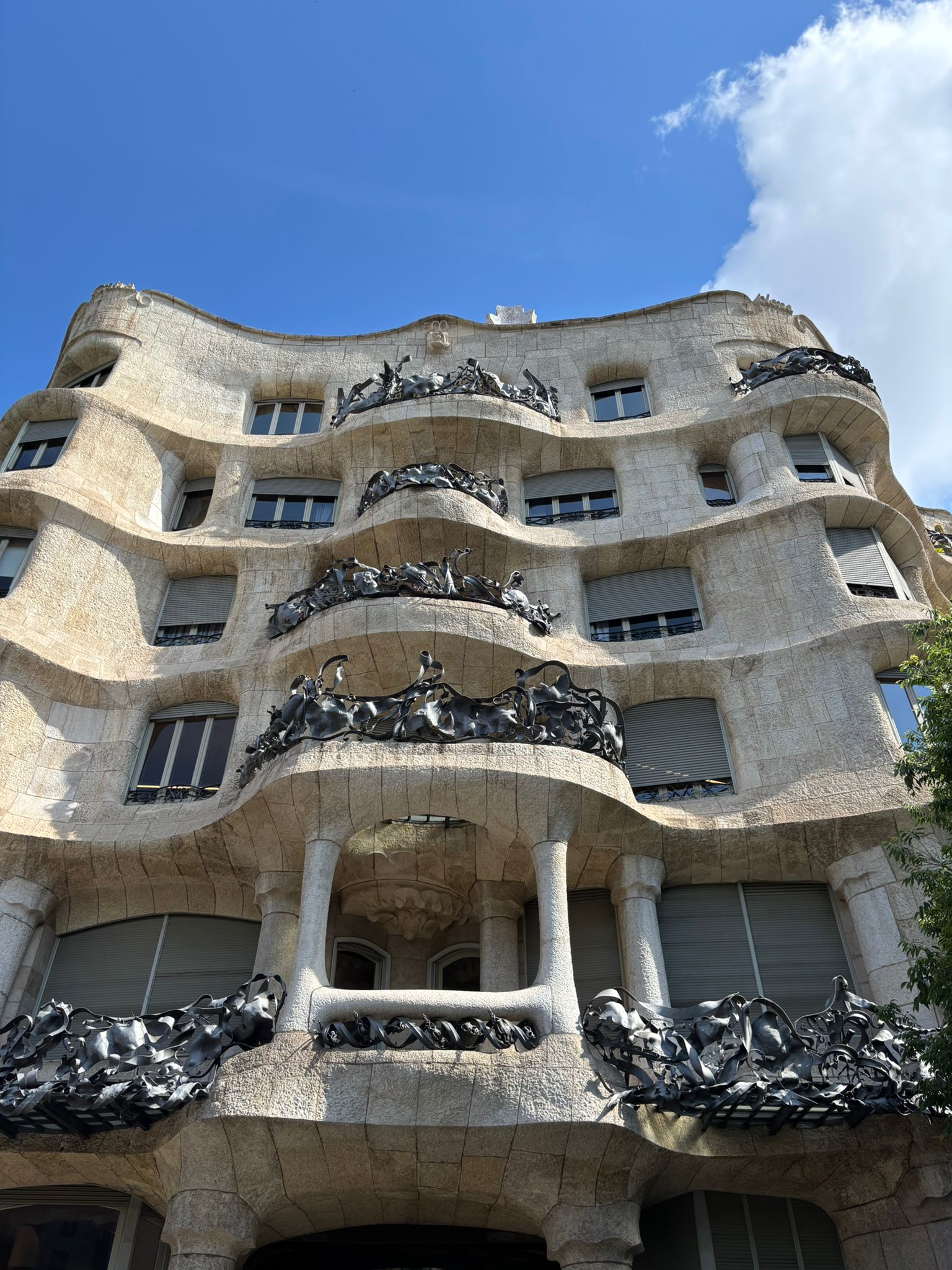
You can start with Casa Batlló and Casa Milà (La Pedrera), both located along the elegant Passeig de Gràcia in the Eixample district. These two masterpieces sit just a short walk from each other and are surrounded by wide, smooth sidewalks—perfect for families. The buildings themselves are stunning: Casa Batlló is colorful and wavy, like something out of a dream, while Casa Milà’s undulating stone façade and wrought-iron balconies look like they were carved by nature itself.
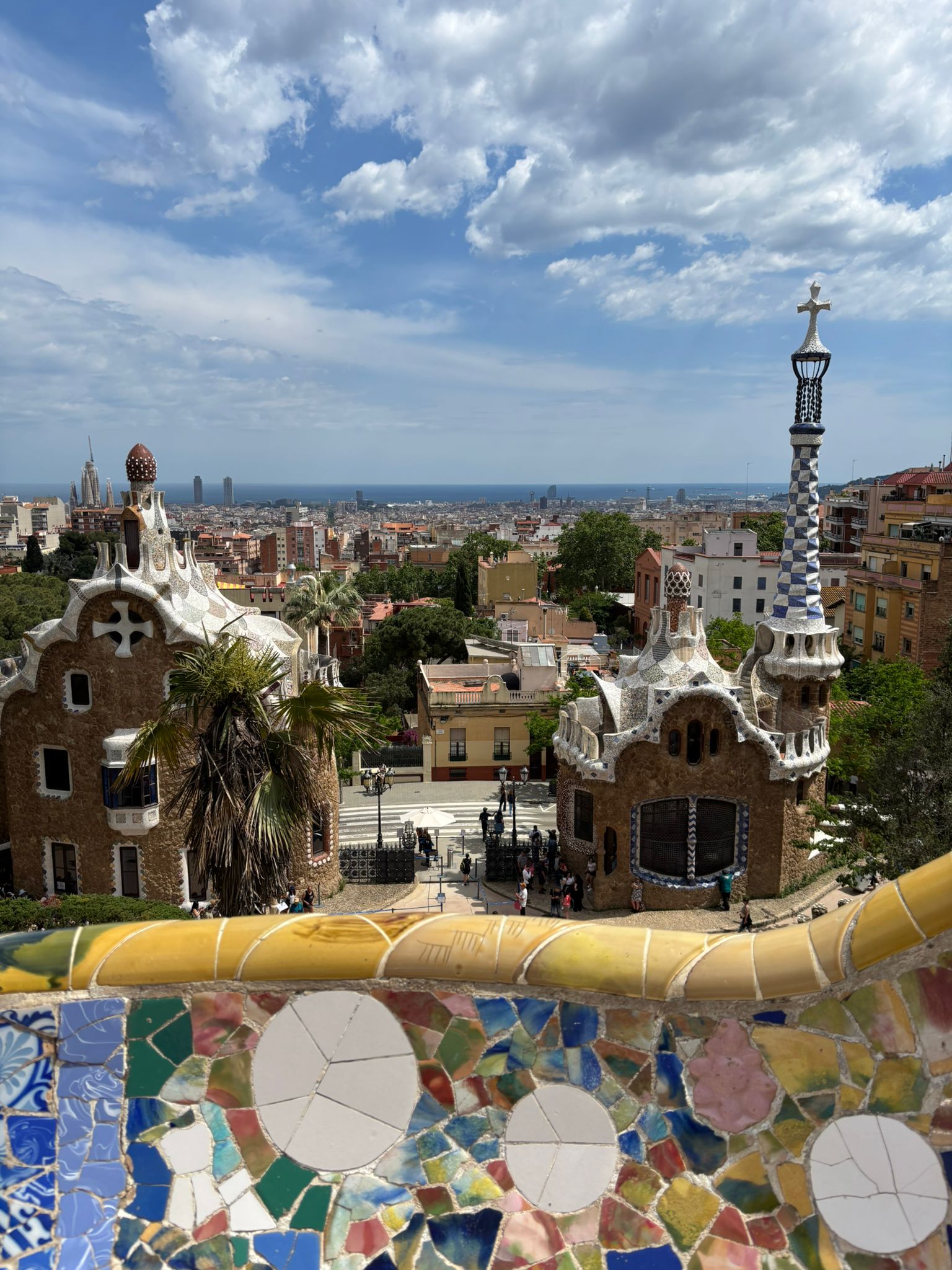
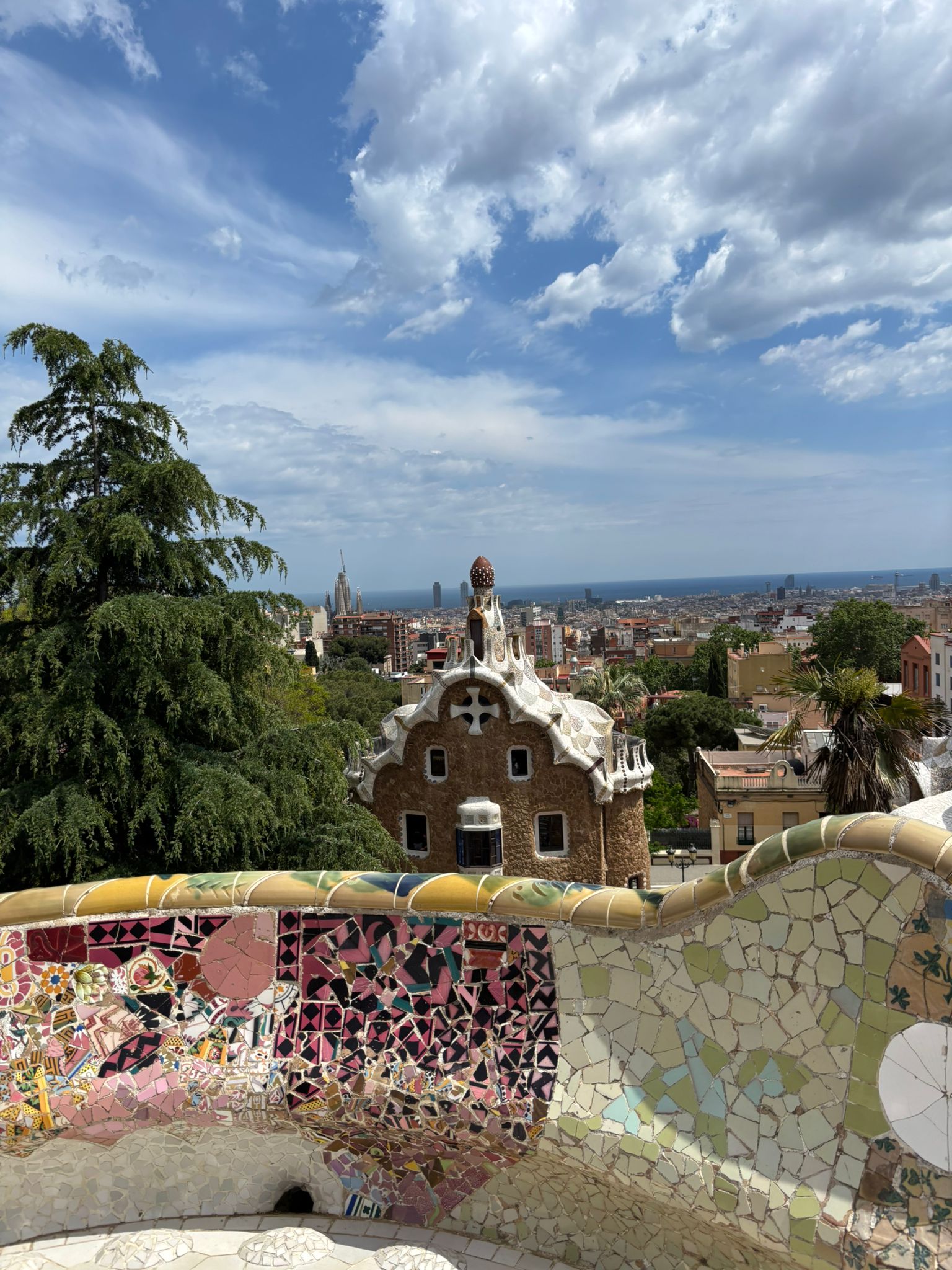
From there, it’s a short metro or bus ride (or even a doable walk if you’re up for it) to Park Güell, Gaudí’s vibrant hillside park full of mosaic-tiled benches, whimsical structures, and great views over the city. The park has some hills, but the main viewing areas are reachable with a stroller if you enter through the right gates.
Not far away, in the Gràcia district—a more local, bohemian part of the city—you’ll find charming little plazas, relaxed cafés, and quieter streets. It’s a nice place to stop for lunch or a coffee break while staying in Gaudí territory.
The Gaudí trail gives you a perfect mix of creativity, history, and relaxing city vibes. Even in just a few hours, you can experience some of the most unique architecture in the world, all without straying too far from the city center or sacrificing comfort when traveling with a child.
Park Güell is a bit farther out from the city center, so getting there takes some time—but it’s definitely worth the effort. We took a bus, which was a bit of a long ride through winding streets, but it dropped us fairly close to one of the entrances. The park itself is beautiful and full of Gaudí’s signature style—colorful mosaics, playful architecture, and amazing views over Barcelona.
While tickets are required to access the monumental zone, the price felt reasonable considering you can spend a couple of hours there easily, just walking around, relaxing, and soaking in the creative atmosphere. It was quite crowded, though—not a surprise, as it’s one of the top attractions in the city.
We had to walk a bit uphill and downhill, and some paths were rocky or covered in gravel, so good shoes (and a bit of stroller-lifting if you’re with a baby) are a must. Still, the vibe was peaceful and pleasant. I even ended up having a great chat with some local workers taking a break in the shade—hearing their stories and getting tips from people who know the park inside out was a highlight. All in all, Park Güell was a slow but satisfying adventure.
PS: Getting around Barcelona is surprisingly easy and very budget-friendly if you plan ahead a bit. One of the best tips we can share is to get the T-usual public transport pass. It costs around 22 euros for a month (Zone 1), and it covers unlimited travel on the metro, buses, trams, and even some local trains within the main city area.
Zone 1 includes almost all the tourist attractions—Sagrada Família, Park Güell, the Gothic Quarter, the beach, Montjuïc, and even areas like Gràcia and Eixample. We used this pass every day, and it worked perfectly for our entire stay. Even if you’re visiting for just a week, it’s a great deal—you don’t need to worry about single tickets, and you can hop on and off as you like.
The metro is fast, clean, and stroller-friendly (most stations have elevators), while buses are great for sightseeing along the way. The app for public transport (like TMB App) is also really helpful for planning routes in real time. Overall, it’s a smart and hassle-free way to explore the city without spending much.
You can buy the T-usual pass directly at metro station ticket machines, but there’s one important thing to know: you can only pay with a physical card (debit or credit). No phone payments, no Google Pay or Apple Pay—it has to be the actual plastic card. The machines are easy to use, available in multiple languages, and accept both Visa and Mastercard. Once you buy your ticket, it’s loaded onto a small plastic travel card that you just tap at the gates each time you enter. Quick and simple—as long as you have the right payment method!
 Bonum Cursum
Dodaj komentarz