• Training during a hot summer can be incredibly challenging. The heat makes even the simplest workouts feel like an intense battle with the elements, testing both your body and your willpower. But one thing is clear: there’s no room for excuses. The weather may be warm, but athletes have always found ways to push through, adapt, and keep training in top form. Whether it’s running, cycling, or swimming, there are always alternatives that can help you stay in shape, even in the hottest weather.

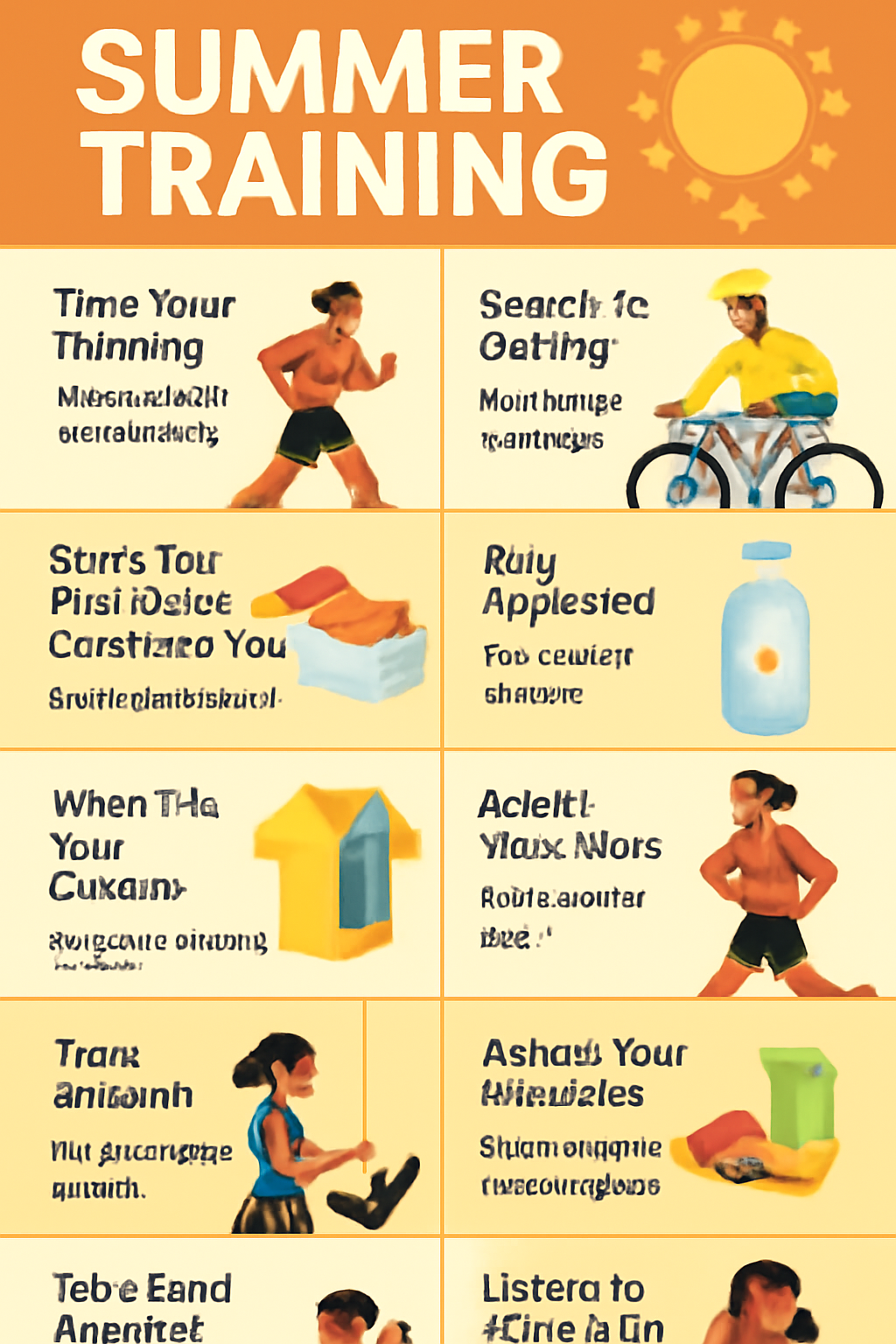
    The key is adjusting your routine, listening to your body, and being smart about how you train. Professional athletes, for instance, don’t let the summer heat derail their progress. They adapt their training schedules, find cool alternatives, and make adjustments to nutrition and hydration. Here’s how you can make summer training more manageable, with ten tips to help you push through:

    1. Time Your Training
      Early mornings or late evenings are the best times to train when temperatures are cooler. The sun is lower, and the heat hasn’t fully kicked in. As professional runners and cyclists do, waking up early to get your training done before the sun gets too intense can help you avoid the worst of the heat.
    2. Switch to Cycling
      If running feels too taxing in the heat, switch to cycling. It’s a great low-impact alternative that keeps your cardio in check without putting too much strain on your joints. Athletes often mix running with cycling, especially in the summer months, to preserve energy and reduce the risk of heat-related injuries.
    3. Swim for Full-Body Conditioning
      Swimming is a perfect summer sport. It provides a full-body workout without putting too much stress on your muscles and joints, and the cool water keeps you refreshed. Many professional triathletes focus on swimming during the summer to avoid overheating while still working on their endurance.
    4. Stay Hydrated
      The most important thing in hot weather is staying hydrated. Drink plenty of water throughout the day, not just during your workout. Electrolyte-rich drinks are also essential to replenish sodium and potassium levels lost in sweat.
    5. Wear the Right Clothes
      Lightweight, moisture-wicking clothing helps keep you cool while working out. Opt for breathable fabrics like cotton, or go for technical gear designed specifically for hot conditions. Some athletes even wear ice vests or cooling towels during their recovery to lower their body temperature.
    6. Adapt Your Pace
      When the heat is unbearable, it’s important to listen to your body and slow down. Trying to push through at your normal pace can lead to overheating and burnout. Many elite athletes adjust their pace during hot months and take breaks more frequently.
    7. Train Indoors
      If outdoor training is unbearable, take it inside. Running on a treadmill, cycling on a stationary bike, or doing high-intensity interval training (HIIT) indoors can help you stay fit without battling the heat. Many athletes use indoor training as a supplement during extreme weather conditions.
    8. Adjust Your Nutrition
      Hot weather means more sweat and energy expenditure, so your nutrition needs change. Focus on lighter meals that are rich in fruits, vegetables, and lean proteins. Fresh smoothies and salads with plenty of hydration (like watermelon and cucumber) are ideal during summer.
    9. Take Cool Showers or Ice Baths
      After a workout, cooling down is essential. An ice bath can reduce muscle inflammation and prevent overheating. Alternatively, a cool shower can help you lower your body temperature quickly and help with muscle recovery.
    10. Listen to Your Body
      This is the most important tip of all. Never push yourself past your limits, especially in extreme heat. Listen to your body’s signals and be prepared to stop if you start feeling dizzy, nauseous, or weak. Heat exhaustion can happen quickly, so it’s crucial to stop and cool off before it becomes a serious issue.
    Food Matters: What to Eat During Hot Weather Training
    Nutrition plays a critical role in how you handle summer training. As the temperature rises, so does your need for fuel and recovery. When it’s hot outside, you burn more calories, and it’s important to replenish that energy. Focus on foods that help replenish fluids, electrolytes, and protein.

    Watermelon and cucumbers are great because they’re high in water content and help keep you hydrated.

    Bananas are an excellent source of potassium, which helps maintain fluid balance.

    Lean meats like chicken and turkey provide protein to repair muscles.

    Greek yogurt is packed with protein and probiotics that can aid recovery.

    Smoothies made with fresh fruits, yogurt, and a handful of spinach or kale are great for post-workout recovery.

    Professional athletes are experts at managing their nutrition to ensure they have the energy they need for both training and recovery. They focus on eating smaller, nutrient-packed meals throughout the day, especially after training sessions. Maintaining a balance of carbohydrates, protein, and fats in your diet can also help maintain your energy and prevent fatigue during hot weather.

    Summer training doesn’t have to mean giving up on your goals because of the heat. With a little preparation and smart adjustments, you can still push yourself to new limits—whether it’s by switching to cycling, finding a cool pool to swim in, or simply getting your runs in during the cooler parts of the day. The key is consistency, no matter what the weather throws at you. The athletes who succeed in summer training know that every step forward, even in the heat, brings them closer to their goals.


  • Music fills my life in a way nothing else can. Bands like Lifehouse and The Fray are not just background noise but part of who I am. Their songs carry stories and feelings that stick with me, especially The Fray’s Happiness, a track that reminds me how even simple moments can glow with joy.

    Years ago, I ran the Chicago Marathon with my iPod and earphones, lost in the music. They almost disqualified me for it. Maybe it was reckless, but that music gave me strength. Happiness played through the pain, keeping me steady and alive mile after mile. It is a feeling I never forget.

    That is why I always come back to music. When the world slows down and the songs fill the air, everything feels right, like the perfect rhythm guiding me forward.

  • The Badwater Ultra Marathon is not just a race; it’s a brutal test of endurance and willpower. Known as one of the toughest footraces in the world, it takes place every summer in the scorching heat of Death Valley, California, and attracts the world’s most dedicated ultramarathoners. The race covers 135 miles (217 km) through the desert, starting in Badwater Basin, the lowest point in North America, and ending at the summit of Mount Whitney, the highest point in the contiguous United States. This punishing terrain, combined with temperatures that can soar above 50°C (122°F), makes the race legendary.

    The most recent edition of the Badwater Ultra was no exception. The winner, once again, was a testament to sheer grit and determination. The first-place finisher completed the race in a jaw-dropping time, proving the incredible physical and mental fortitude required to overcome the extreme conditions. As always, the heat took a heavy toll on many runners, but the winner’s resilience was nothing short of inspiring.

    Among those brave enough to take on this grueling challenge were some Polish runners, including one who I’m particularly proud of, even though he didn’t finish. It’s easy to forget that the true victory in a race like this isn’t always about crossing the finish line first. For many, the Badwater race is about pushing your limits and going further than you’ve ever gone before. Just participating in such a legendary event is an achievement in itself. This Polish runner showed remarkable courage, setting off with the hopes of completing one of the toughest races on Earth. But the desert heat is unforgiving, and even the most experienced athletes can be defeated by it.

    To get a sense of what it’s like, imagine running for hours, miles upon miles, with the sun beating down relentlessly. The pavement radiates so much heat that it feels as though you’re running on an open flame. The air is dry, and each breath feels like you’re inhaling the furnace of the desert itself. Water stations are spaced far apart, and every step takes you further into the unforgiving landscape. You can see the mirages on the horizon, making you question whether what you’re seeing is real or just another illusion caused by the oppressive heat.

    I had my own experience with extreme heat during a marathon in 40°C (104°F), and I can say from personal experience that it’s not easy. The race was a fight against the sun, a battle of survival more than a race to finish. I did manage to cross the finish line, but not without significant toll on my body. I had to be rushed into a medical tent right after the race—exhausted, overheated, and barely able to stand. That’s the thing about heat: it’s silent and sneaky. You don’t realize how much damage is being done until it’s too late.

    But even with my experience in mind, the Badwater Ultra is an entirely different level of extreme. The runners in Badwater face not just heat, but the mental challenge of pushing through the exhaustion for over 135 miles. While my marathon experience was tough, the Badwater Ultra’s brutal combination of distance and heat tests everything—strength, stamina, and sanity.

    The race itself has a rich history. It began in 1977, conceived by race director Chris Kostman, as a challenge for a few daring runners. Back then, it wasn’t the global event it is today, but it quickly became a legendary race in the ultrarunning community. Since its inception, the Badwater race has grown in fame, attracting the world’s elite ultra-athletes, some of whom come from as far as Europe, Japan, and beyond. Runners who sign up are well aware of what they are getting into: a race that is part physical challenge, part mental ordeal, and all about perseverance.

    In conclusion, while it’s easy to talk about the winners and the records broken, what’s often forgotten is the journey each runner takes. Many won’t finish, and that’s okay—just being out there on that course is an achievement in itself. Whether you’re a victor or a DNF (Did Not Finish), the fact that you dared to challenge yourself in such extreme conditions speaks volumes. The Badwater Ultra is more than a race; it’s an experience that reshapes your perception of what’s possible. And for me, as someone who’s faced the heat myself, I stand with those who push beyond their limits, no matter where they finish.

  • This year feels different in my country, Utopia. There’s a new energy in the air — a sense that things might shift quietly, bringing fresh chances and new beginnings. I’m not really into politics, but even I can feel the subtle changes around me. People seem hopeful, waiting to see what the future holds.

    Summer this year is unusual — dark and changeable, with sudden showers and long, cool evenings. It’s the kind of summer that invites you to slow down, to chill in the garden with a good book or just enjoy the soft hum of nature around you. I’ve been spending time with my girls, exploring nearby regional places, soaking up the simple, lovely moments that make life so rich. The pace is slow, relaxed, and peaceful — a perfect balance to the quiet anticipation of what’s coming next.

    This month, I’m taking a break from races, focusing instead on long-distance training. Maybe October will bring a season full of joy and racing, with new energy and challenges to embrace. And quietly, there’s something new on the horizon for me — a little secret that makes this time feel even more special.

  • During the week, life is all about juggling work, responsibilities, and the daily grind. Most people use those five days to recharge for the weekend or keep the usual routine going—rarely do they look forward to working out in the middle of it all. But for me, the work doesn’t stop just because it’s Tuesday. The training starts quietly in the background: a run after a long shift, hill sprints before dinner, or strength workouts squeezed into a tired evening. It’s all part of getting ready for the weekend—the real reward.

    I see more people doing it now—fitting in weekday training to make their weekends count. Trail races, long hikes, cycling trips… it’s becoming more common to prepare, not just react. Still, I think many folks keep their effort packed into the weekend only. That’s fine—it’s their rhythm. But for me, the joy comes from the full cycle: weekday prep fueling weekend freedom.

    This rhythm isn’t new to me, either. Since I was young, weekends were always filled with something memorable. My parents made sure of it. Whether it was a forest walk, a small peak, or a day outside with a backpack and a snack, we never just sat around. I carried that habit on—sometimes going solo, sometimes with friends or college buddies—and now, getting to share that with my own family is honestly one of the coolest parts. Seeing the next generation enjoy the trails, the climbs, the effort and reward—that’s what keeps me going.

    By Friday night, I’m not thinking about rest—I’m thinking about the plan. I check the weather, lay out my gear, and decide if it’s a solo mission, a group adventure, or a family hike. I’ve done the work during the week. My legs are ready, my lungs are trained, and my spirit’s itching for the outdoors.

    The weekend becomes more than just a break. It’s a tradition, a personal challenge, and a way to reconnect—with nature, with myself, and with those around me. And yeah, by Sunday evening, I might be walking funny and craving a mountain-sized meal, but I wouldn’t trade it for anything.

    Being a weekend warrior isn’t about being the fastest or the fittest. It’s about showing up, staying ready, and finding joy in every step—even the uphill ones. Especially the uphill ones.